Medical device risk management software
ISO 14971 risk management lives or dies on traceability: from hazard to requirement to test to post-market data. Here's what the process requires, what software should actually do for it, and how the tool categories compare.
The ISO 14971 process your tool has to carry
Whatever you use — spreadsheets, an eQMS, or a lifecycle platform — the risk management file has to document each of these stages, and keep them consistent as the device changes.
-
PLAN & CRITERIA
A risk management plan with a defined risk acceptance matrix — severity and probability levels agreed before any analysis starts.
-
HAZARD IDENTIFICATION
Hazards and hazardous situations across intended use and reasonably foreseeable misuse.
-
ESTIMATION & EVALUATION
Severity and probability for each risk, judged against the acceptance criteria from the plan.
-
RISK CONTROLS
Controls in the required order — safe design first, protective measures second, information for safety last — each one traced to a requirement, implemented, and verified. This is where traceability becomes the whole game.
-
RESIDUAL & BENEFIT-RISK
Residual risk evaluated after controls; an overall benefit-risk conclusion documented in the risk management report.
-
PRODUCTION & POST-PRODUCTION
Complaints, nonconformances, and post-market data flow back into the analysis. Risk management doesn't end at release — and neither should your tool's involvement.
Why traceability decides the tool question
Every audit of a risk file asks the same connecting questions: which requirement implements this risk control? Which test verifies it? Did the complaint you received last quarter feed back into this analysis? In a spreadsheet, those links live in people's heads and break silently on every design change.
That's the honest software criterion: not prettier risk tables, but links that survive change. When a mitigation's requirement changes, the tool should show you the affected risks and stale verifications — not leave you to rediscover them in an audit.
The tool categories, honestly compared
Spreadsheets and templates. Free, auditable, and fine for a first device with a small risk table — our risk plan, FMEA table, and risk report templates are exactly this. The cost is manual traceability, which grows with every requirement and change.
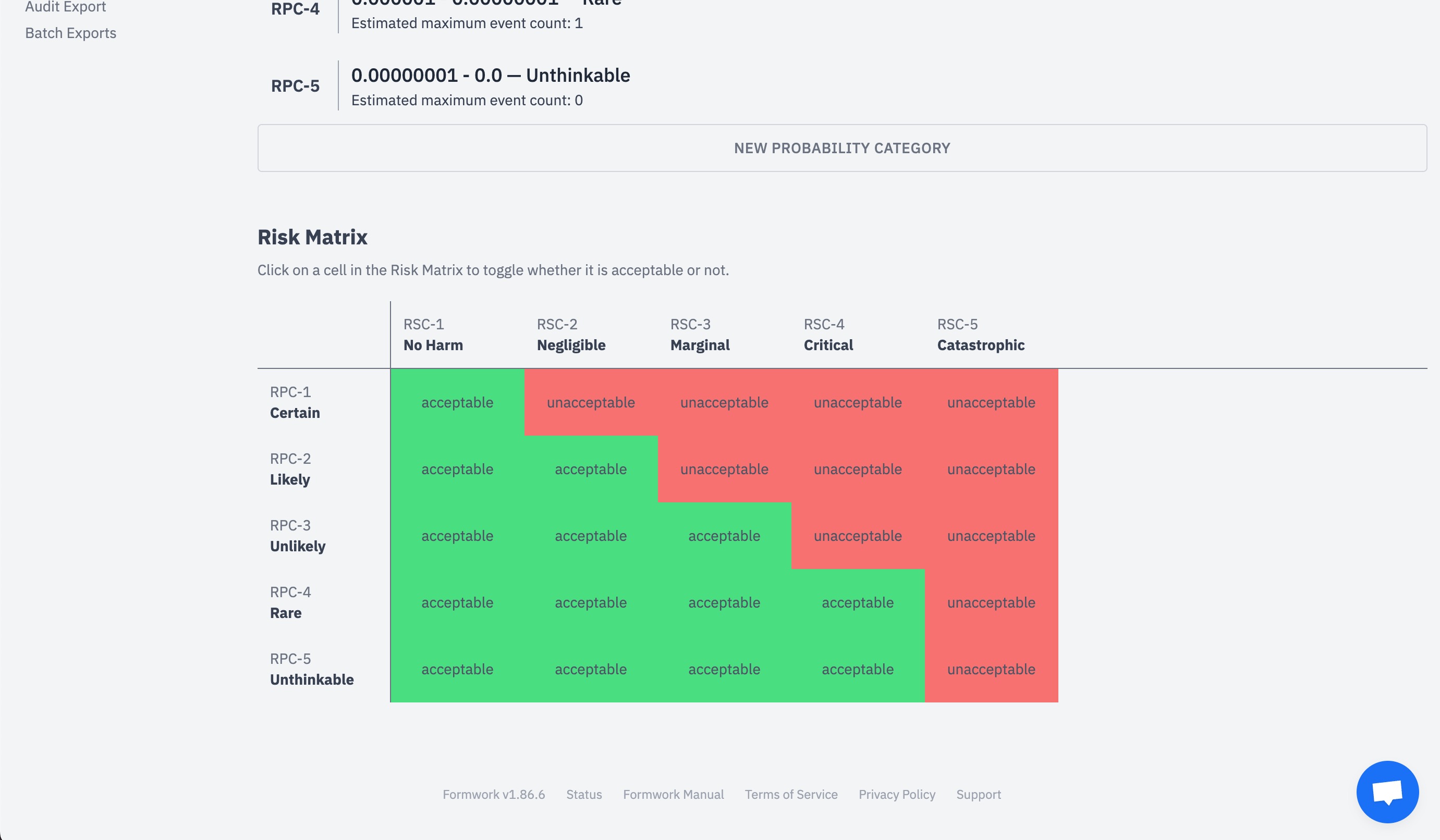
eQMS platforms with risk modules. Risk lives next to documents, CAPAs, and training, so these platforms can connect feedback and approvals when those integrations are actually implemented. Formwork is in this category: ISO 14971 risk tables with a risk matrix, linked to requirements and tests, with the templates built in. Depth varies a lot between vendors — check whether risk links to requirements or just sits in its own table.
Lifecycle/ALM platforms. Requirements-first tools with deep traceability, strongest for complex SaMD and large engineering teams. They handle the design side well but usually need a separate QMS for documents, training, and CAPA — two systems to validate and keep in sync.
Choosing risk management software: what to look for
- Risk tables that follow ISO 14971's structure, with your acceptance matrix built in
- Traceability from hazard to risk control to requirement to verification
- Change impact: touching a requirement flags the affected risks and tests
- Post-production feedback: complaints and nonconformances link back into the analysis
- Approvals and e-signatures on the risk plan and report
- Audit-ready export of the complete risk management file
- Templates or examples so you don't start from a blank matrix
- Pricing you can find without talking to sales
Frequently asked questions
Does ISO 14971 require software?
Can we do ISO 14971 risk management in a spreadsheet?
What's the difference between FMEA and ISO 14971?
What is a risk acceptance matrix?
Does this apply to software as a medical device (SaMD)?
Keep reading
Risk Management Plan & Acceptance Matrix
The free ISO 14971 plan template.
FMEA Risk Table
The working risk table, free.
Risk Management Report
Close out the process with the report template.
QMS software comparison
The broader comparison across full eQMS platforms.
Sources: ISO 14971:2019 (official ISO page, no reproduced text) · ISO 13485:2016 clause 7.1 · FDA Quality Management System Regulation.
Written and reviewed by
Dr. Oliver Eidel
· Last reviewed August 19, 2026
· Next review August 2027.